About Me
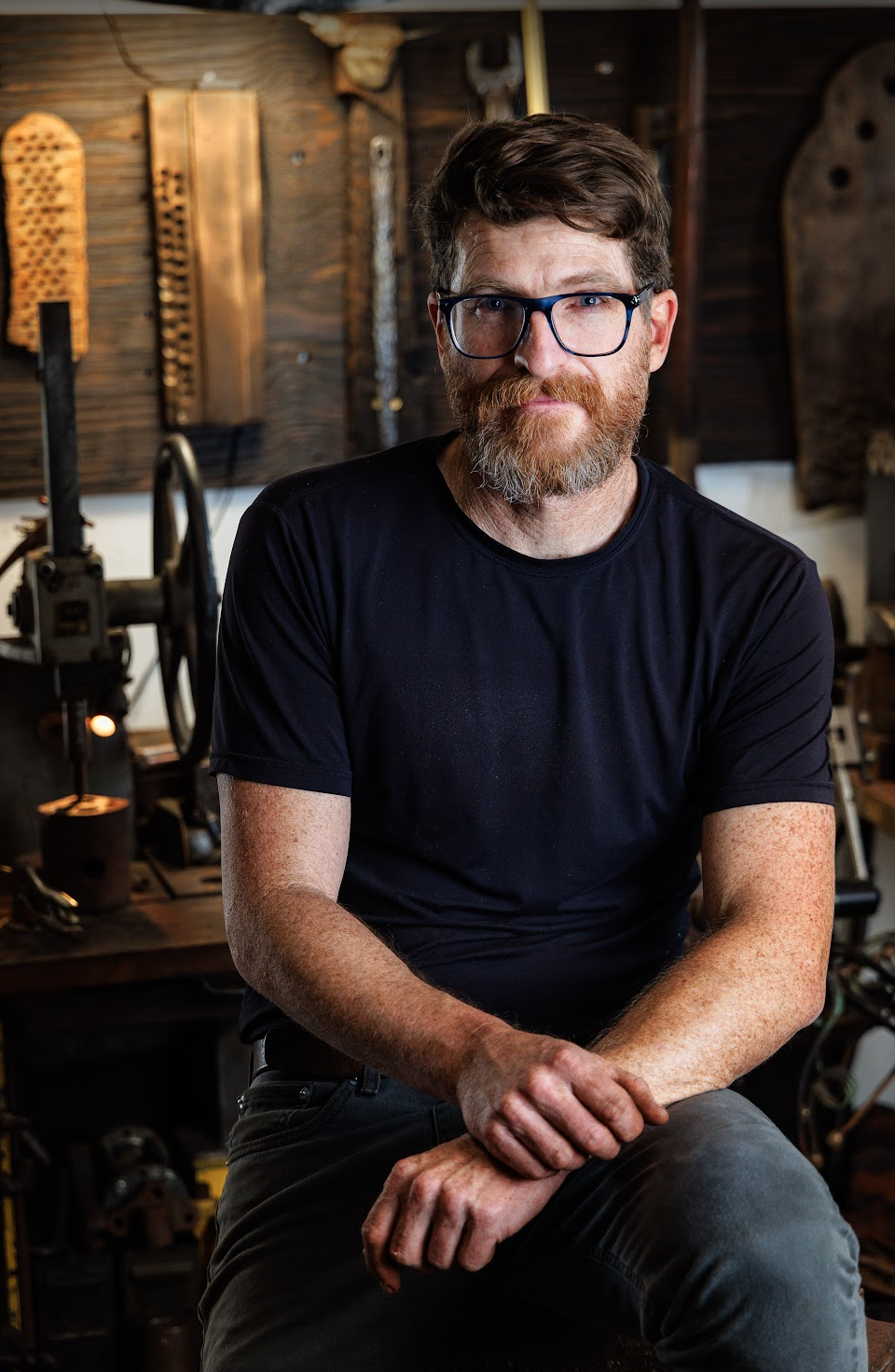
My name is Jason Campbell and I am a blacksmith artist based in Carpinteria, California.
How it began
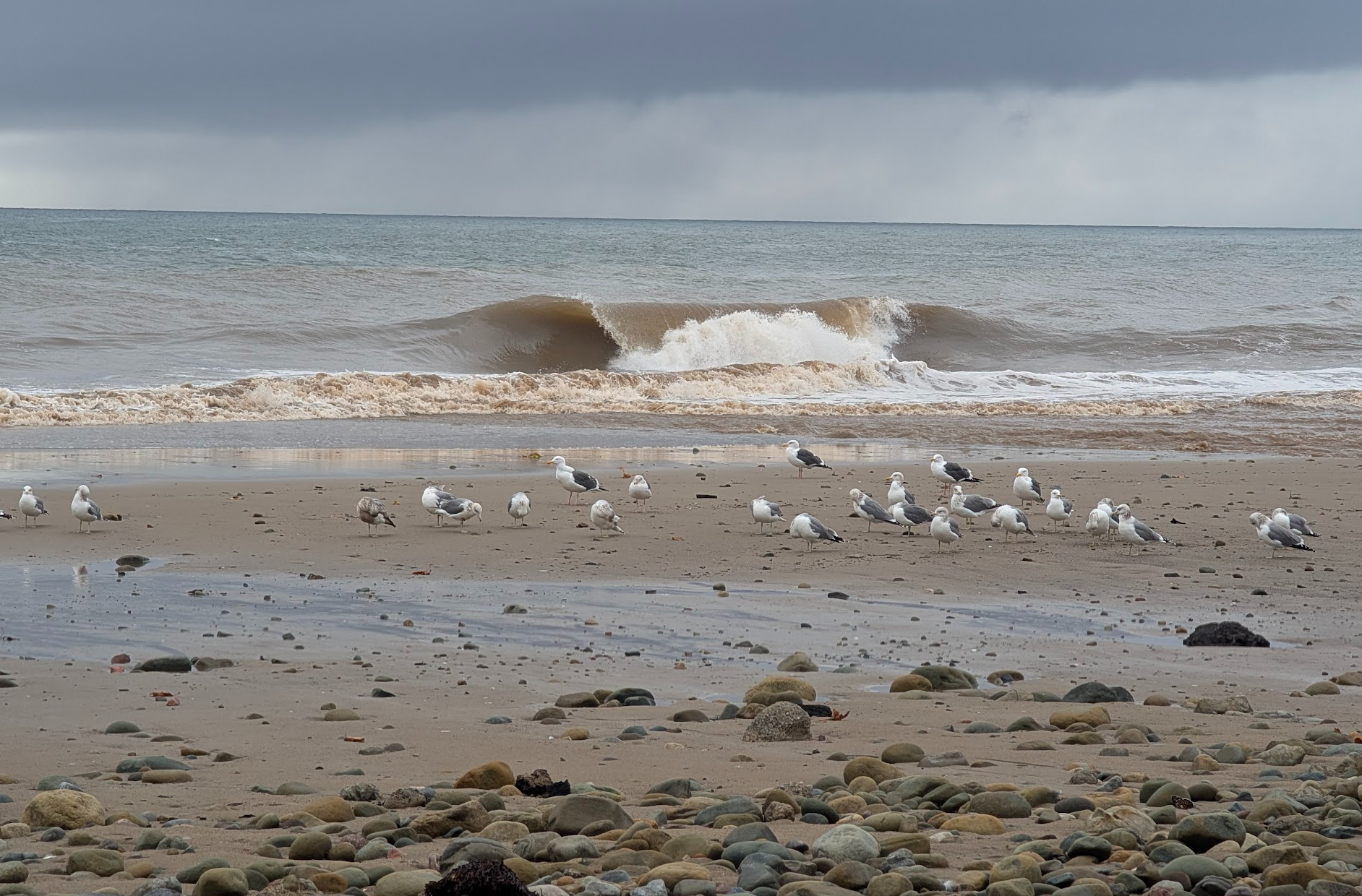
I’ve had a lifelong passion for finding and collecting interesting objects but after having kids and hanging out with them on the beach the hunt for cool rocks took on a new level of intensity. Fossils, agates and jaspers are very common along our coast, but on occasion, weird pieces of metal sticking out of rocks, were intriguing? They seemed more dangerous than cool at first until I found what I thought was a sword, which was still dangerous but certainly cool. Further research lead me down a rabbit hole of wrought iron and blacksmithing with millennia of history.
What it became
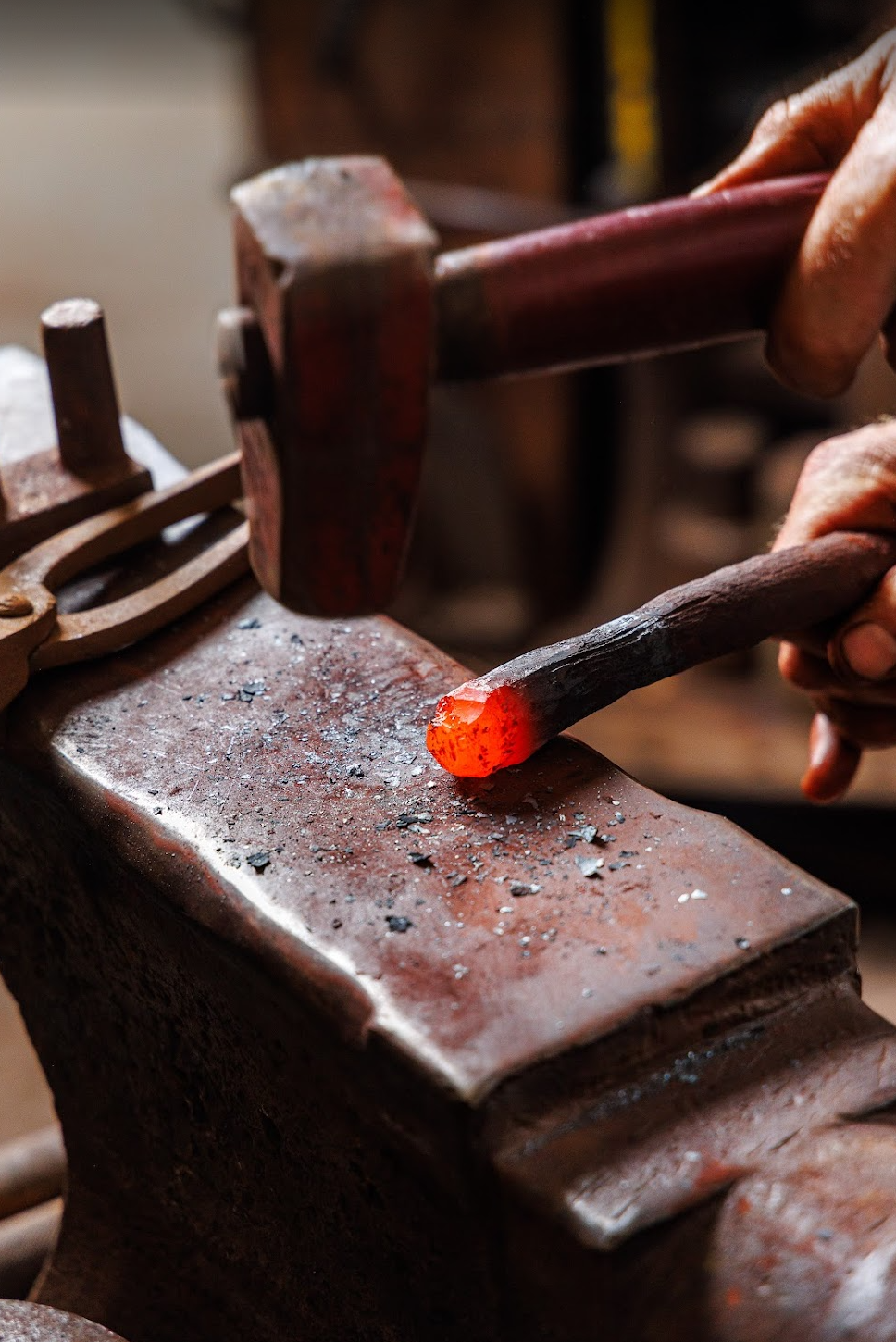
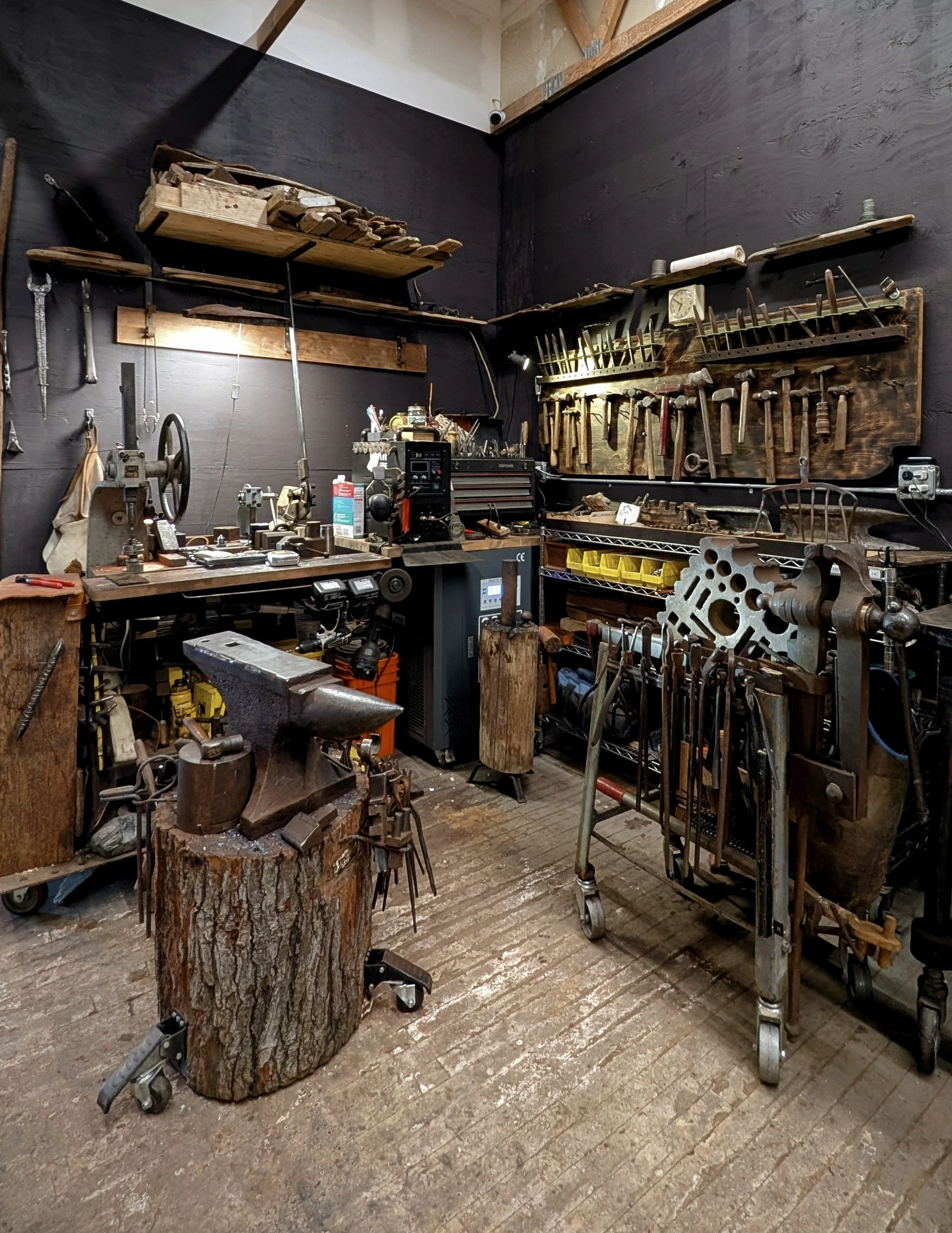
My blacksmith studio in Carpinteria gives me the tools and setting to forge new purpose into the material I have been collecting.
I make both functional and artistic products and works that preserve the corrosive history displayed on the material as I found it, but with the rust removed.
What is this stuff?
I continued to collect while further researching it’s origin of the material and discovered the state of California designated this industrial trash as a public hazard. Funding dedicated to its removal has been used to clean up the coast for years.
Most of this material is leftover hardware from the oil infrastructure that existed over a century ago. Think of the huge bolts holding piers together, rail track driven into the sand to support seawall armor stone and rip rap, plates and hinges, spikes, hooks and chains all haphazardly forgotten and eventually buried by the swell and sand.
As these discarded iron objects slowly rusted away to inevitably rejoin nature, the labor intensive commercial process used to produce their stock went extinct globally. These objects were considered just “iron” when they were made, but emerged as “wrought iron”, a term now used to distinguish old metal from modern mild steel.
You have perhaps heard the term wrought iron, which is also used to to describe architectural and decorative iron work such as railings and gates, but these new wrought iron things are rarely actually made with the material wrought iron.
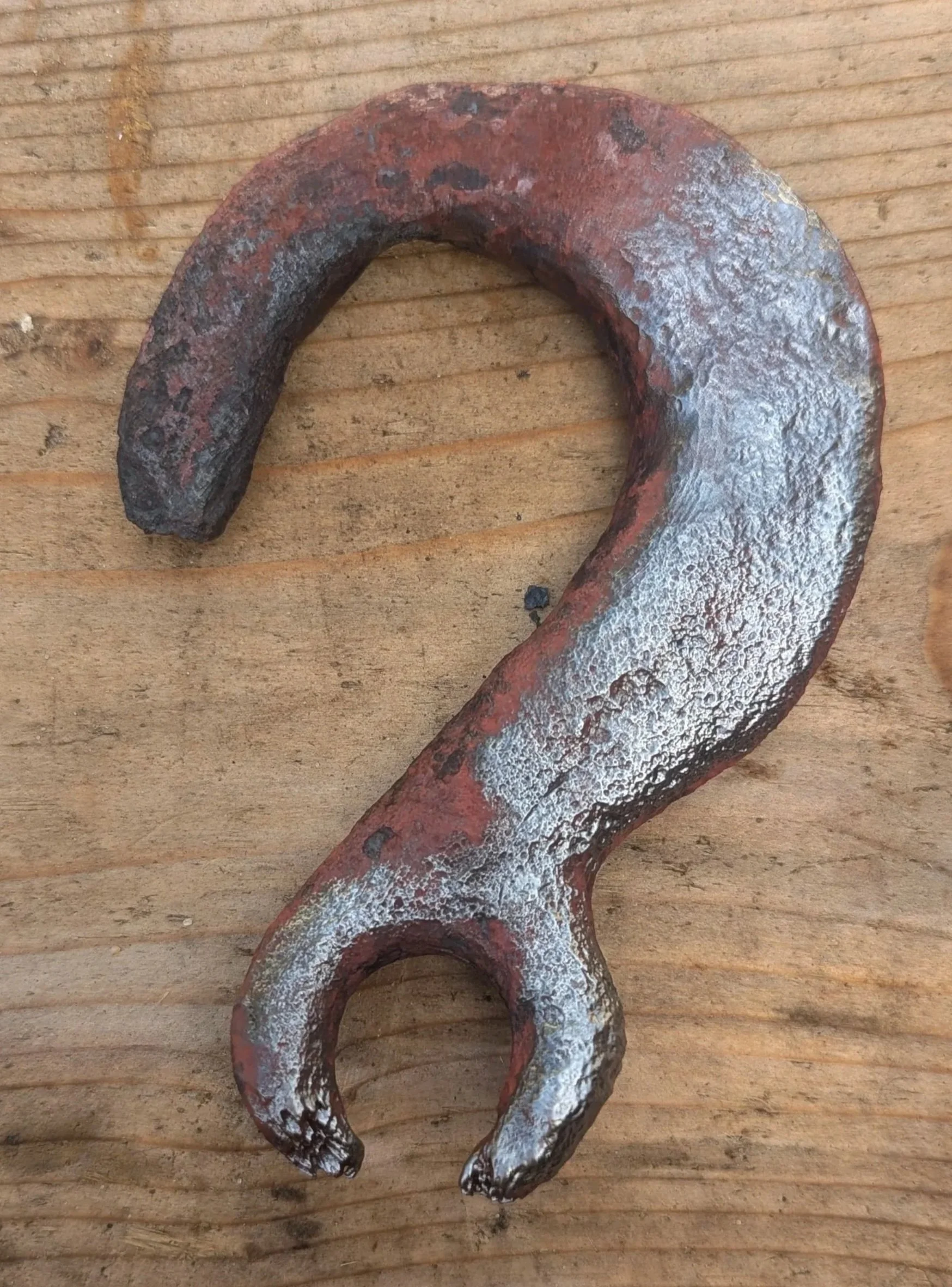
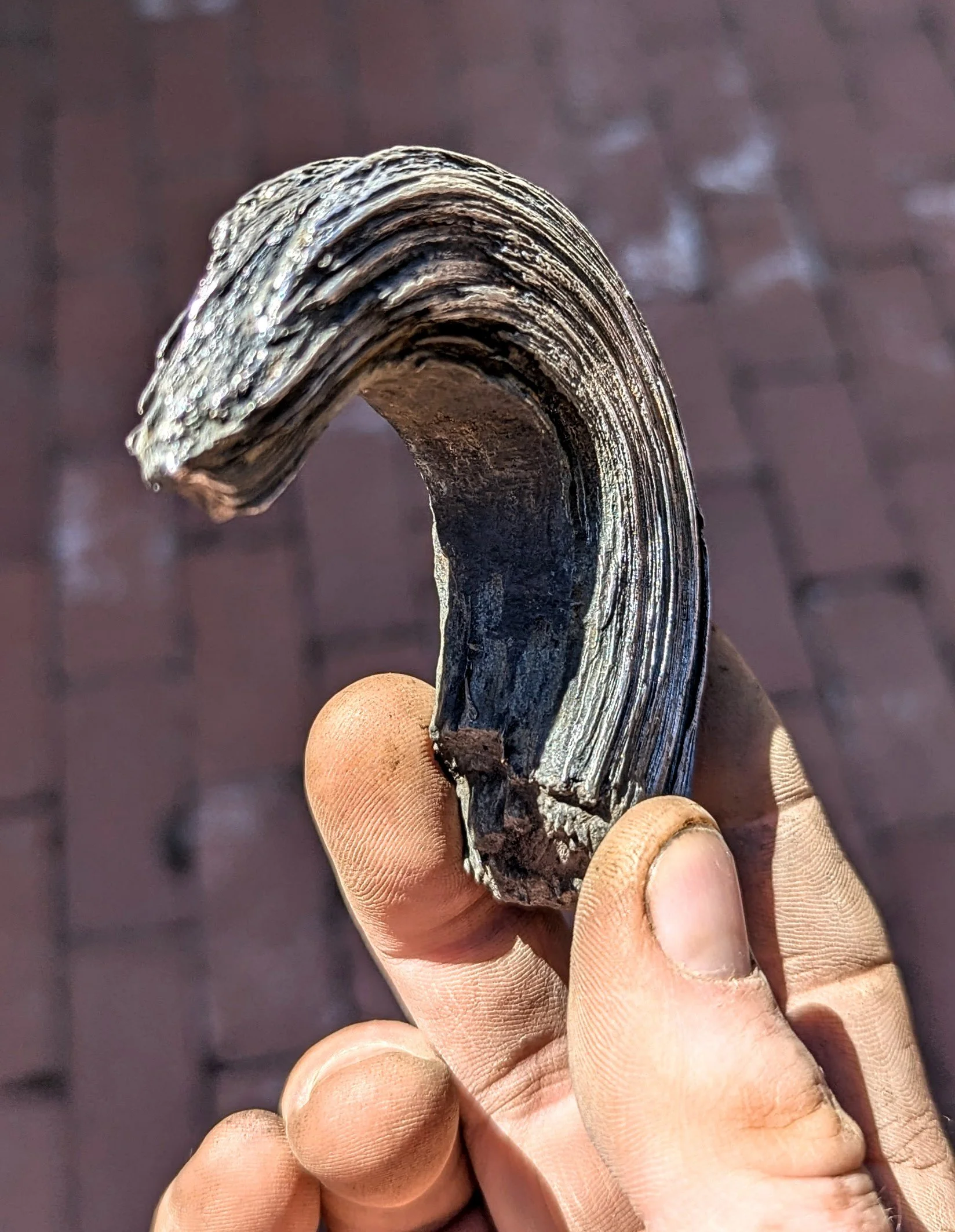
A partially cleaned hoisting hook.
Commercially Extinct metal?
Going back millennia iron ore was worked into wrought iron, “wrought” literally means “to be worked”. The ore would be heated in a bloomery furnace resulting in a spongy glob of iron, silica and carbon that would be forged and folded and forged and folded into itself forming a homogenized billet. This folding process created a unique property in that metallic crystal structure where the silica was stretched into microscopic glassy needles running parallel to the length of the metal bar being made.
All this work folding and forging was expensive at industrial scale and was replaced by a blast furnace using air to homogenize the iron, silica and carbon. The shape of the silica in mild steel has lost it’s needle likeness, which isn’t noticeable when comparing new mild steel and new wrought iron for a new project. When it comes to corrosion resistance, wrought iron wins hands down both in the length or time it can last, and the beauty of the corrosive texture it develops.
In general, ancient iron artifacts are rare because iron oxidizes or rusts on earth and there is no way to stop that. You can slow it down with coatings, and remove it with abrasion, but it will inevitably decay into red dust. Owning these objects make you part of the preservation.
The classic wrought iron wood like texture.
Fossilized meteorites of pre-nuclear industrial trash.
Both mild and wrought are undergoing what is referred to uniform corrosion, basically the exposed layer is oxidizing at a similar rate around the entire surface. The silica needles in wrought iron guides the corrosion into long narrow gutters that get clogged with new rust providing a resistant coating slowing the uniform corrosion in that gutter. That process keeps compounding on itself and the result is a visible wood like grain.
This unique corrosion texture specific to wrought iron can be combined with other types of corrosion such as abrasion, where the metal is smoothed over by exposure to waves and sand. Hardness differences within the metal can result in pitting while the core develops the wood like texture.
Discovering the hidden beauty and variety of complex textures and forms was like an Easter egg hunt. The metal I find is often found completely encased in a concretion of rust which grows with sand, rocks glass and wood, I have even found a bullet and a coin stuck to them. These concretions can look like an ordinary rock, with no indication of what form of metal is within, but are distinct enough to spot by them by eye on a rocky beach.
The satisfying audible crack heard when you split the right concretion open and seeing the iron treasure inside exposed for the first time in a century is exciting. It can often be pulled out and rinsed off with water revealing rust free metal.
There have been many times I gasped at what I found because it’s form is nearly complete such as a tool or a hoisting hook. There are also duds that contained something but have rusted away completely leaving behind the cavity of what it was such as a railroad spike. One unique example was a re-solidified iron oxide dust rail spike head, basically the same form but made from rust dust.
Cast iron often leaves a cavity inside a concretion but the iron has turned into a paste-like substance similar to oil paint but is water soluble and can be rinsed away.
Finding it was fun, but after years of collecting I had acquired a fairly substantial amount of material and needed to start getting this out there. Everyone I shared it with felt it was something completely unique and significant. How history, nature, science, and art can be present in these fossilized meteorites of pre-nuclear industrial trash.
An opportunity to move into a shared workshop came at the right moment in my life so I left the backyard forge behind to see where this project would take me.
My ever evolving workshop in Carpinteria.